
Fortune's Edge | Fortune's Edge: Exploring Mahjong's Intricacies
Fortune's Edge’s Discover the cultural and strategic intricacies of Mahjong, with a focus on how Fortune's Edge plays a pivotal role in its timeless appeal.
Exploring the Intricacies of Mahjong and the Concept of Fortune's Edge
Mahjong is a traditional game that has captured the imagination of millions of players around the world. Rooted deeply in Chinese culture, it represents more than just a game. Mahjong is a melding of skill, strategy, and chance, making it a captivating pursuit for people of all ages. As players navigate through strategically placing tiles, they occasionally find themselves at the mercy of Fortune's Edge, a critical juncture where luck can decisively sway the outcome. This concept not only heightens the excitement of the game but also contributes to its timeless appeal.
The Origins and Evolution of Mahjong
The origins of Mahjong are shrouded in myth and uncertainty. However, the consensus among historians is that the game was developed in China during the Qing Dynasty. Originally played by the elite, Mahjong was a game of leisure that soon spread throughout different strata of society. As it gained popularity, regional variations began to emerge, each adding a unique twist that reflected local customs and preferences.
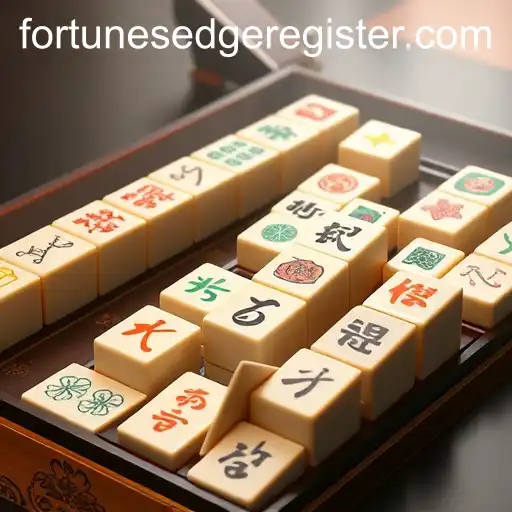
Mahjong is traditionally entrenched in four-player setups, although variations exist that accommodate different numbers of players. The core of the game involves a set of ceramic or bamboo tiles, each adorned with iconic symbols, characters, and illustrations. Much of the appeal of Mahjong lies in its aesthetic beauty and tactile experience. Beyond the surface, these tiles carry intricate rules that require discernment, strategy, and sometimes a bit of luck.
Understanding the Gameplay
The fundamental goal in Mahjong is to assemble a winning hand by drawing and discarding tiles. The game is divided into rounds, with each player taking turns to draw a tile from the wall (an arrangement of face-down tiles) and, if wished, discarding a tile. A winning hand is typically composed of sets and pairs. A set can be a "pong" (three identical tiles) or a "chow" (a sequence of three consecutive numbers of the same suit), while a pair is two identical tiles.
Points are assigned based on the complexity and rarity of the sets and patterns achieved in the player's hand. Accumulating the highest score through strategic tile selection and discard is the measure of victory. However, none of this would be possible without the influence of Fortune's Edge, which can dramatically alter the landscape of the game.
The Influence of Fortune's Edge in Mahjong
The concept of Fortune's Edge in Mahjong is akin to the turning point where a player's fortunes can change, influenced either by a fortuitous draw or an opponent's discard. Unlike many games of pure strategy, Mahjong contains an element of chance that defies even the most astute attempts at prediction. While skillful play involves calculated risks and keen observation, the influence of luck ensures that no player can become complacent.
Fortune's Edge becomes especially significant towards the latter stages of a game, where every move can potentially seal one's fate. The potential for a lucky draw keeps players engaged, and the unpredictable nature ensures a level playing field, where even novices can claim a surprising victory. This delicate balance between skill and luck is what has ensured Mahjong's popularity and longevity through the centuries.
The Cultural Significance of Mahjong
Beyond its technicalities, Mahjong holds a special place in Western and Eastern cultures alike. In Chinese communities, it is more than just a pastime; it is a social activity that fosters family bonds, friendship, and camaraderie. Playing Mahjong during festivals, family gatherings, or mere casual get-togethers is a way to bond and share experiences.
Globally, Mahjong has transcended cultural barriers, manifested in the formation of clubs and online communities where enthusiasts can engage in the game. These gatherings provide a space for individuals to enjoy and learn about different styles of play, effectively making these communities a melting pot of cultural exchange. Here too, the notion of Fortune’s Edge enriches the conversation, offering anecdotes of gaming moments defined by unexpected turns of luck.
Adapting Mahjong in the Modern World
In recent times, Mahjong has become more accessible than ever. With the advent of digital platforms, players can participate in games online, connecting with fellow enthusiasts worldwide. The shift to digital has preserved the intrinsic qualities of Mahjong while allowing for innovations and customizable gameplay.
Online adaptations often incorporate tutorials and AI assistance, making the game approachable for newcomers. Platforms facilitate multiplayer modes where adaptations of domestic and international variants can be explored. As Mahjong continuously evolves, Fortune’s Edge remains a core aspect, creating moments of suspense and excitement that draw users into the game repeatedly.
Conclusion: The Timeless Allure of Mahjong
For both players and onlookers, the charm of Mahjong is perpetual. The combination of skill, strategy, and the unforeseen fortune offers a dynamic experience that is rewarding regardless of the outcome. Fortune's Edge encapsulates this mix perfectly; it provides a narrative sport that is as unpredictable as it is engaging. Mahjong's continuous ability to generate enthusiasm and shared stories among diverse players fosters unity and enriches lives, solidifying its place as a cherished cultural treasure worldwide.
By exploring the elegant simplicity of Mahjong alongside the enigma of Fortune's Edge, enthusiasts can appreciate the profound blend of tradition and adaptability that this timeless game beautifully manifests.
